Custom pet mats have become a necessary product category in the modern pet industry. As more and more pet owners pay attention to cleanliness, pet health, and home aesthetics, the global demand for durable and practical feeding mats continues to grow.
For pet brands, wholesalers, Amazon sellers, and private label enterprises, choosing the right pet feeding pad material is of utmost importance. The material directly affects the durability, safety, appearance, user experience, manufacturing cost, and long-term customer satisfaction of the product.
So, what materials are best for durable pet feeding mats?
In this guide, we will explore the most commonly used materials for pet feeding mats, compare their advantages and disadvantages, and explain why food-grade silicone has become the preferred material for high-end pet feeding products.
The pet feeding pad is subject to wear and tear every day, including:
Water stains
Pet saliva
Wet food residues
Oil stains
Scratching and paw movements
Repeated cleaning
High temperatures and humidity
Low-quality materials may have problems such as cracking, wrinkling, absorbing odors, fading or being difficult to clean. For pet brands and retailers, choosing inappropriate materials may lead to:
Negative customer reviews
Product returns
Safety issues
Short product lifespan
Poor brand reputation
Therefore, choosing durable, food-grade and easy-to-maintain materials is crucial for the long-term success of the product.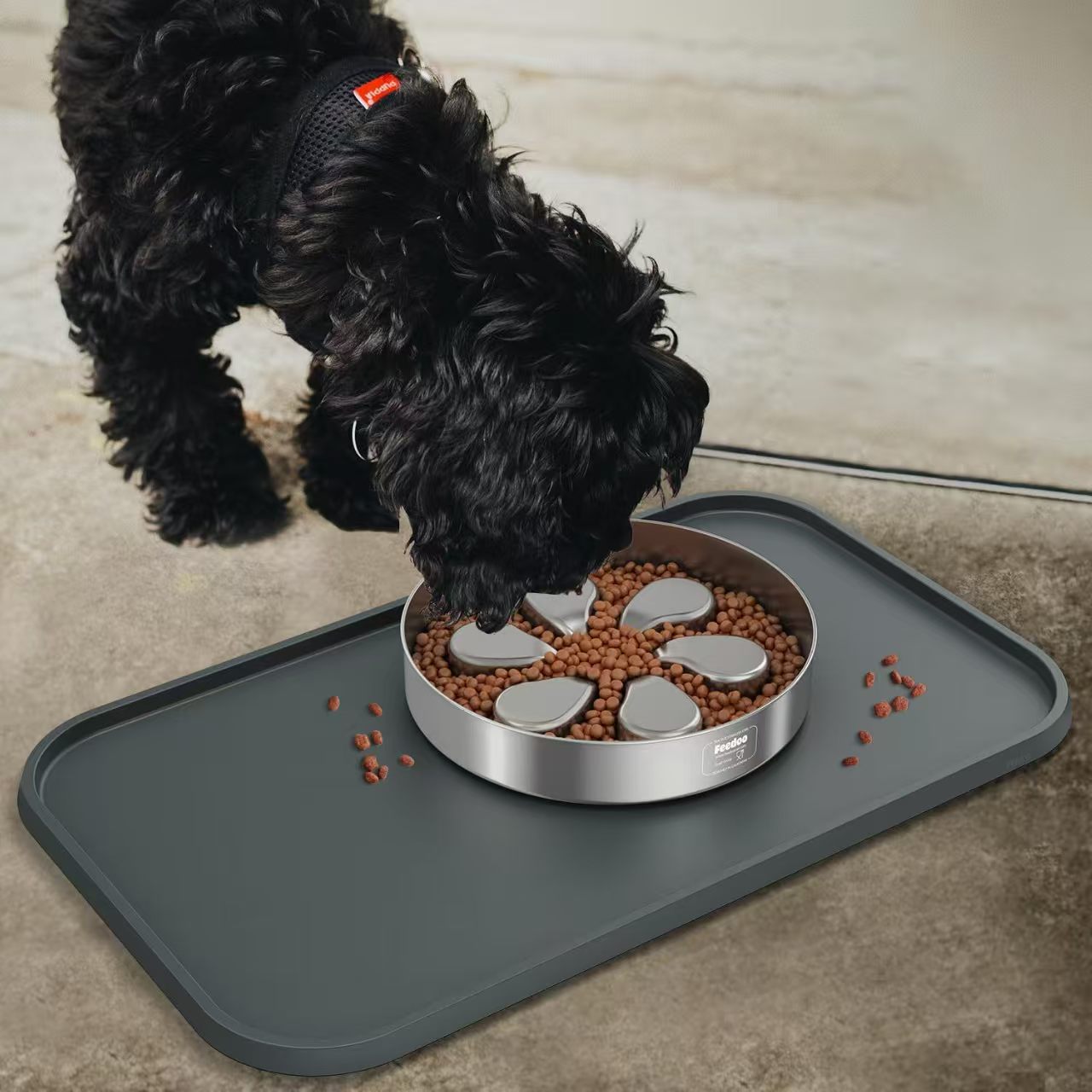
Currently, the main materials used to make pet feeding mats in the market are:
Silicone PVC Plastic
Rubber
Fabric or microfiber
Corduroy or wood fiber composite materials
Each material has its own characteristics, cost structure and target market.
Silicone is a flexible synthetic material made from silicon, oxygen, carbon, and hydrogen. Food-grade silicone is widely used in kitchenware, baby products, medical products, and pet accessories because of its safety and durability.
Silicone feeding mats are now one of the most popular choices in the premium pet product market.
Silicone is highly resistant to:
Unlike plastic mats which become brittle over time, silicone remains flexible even after being used for many years.
Food-grade silicone naturally repels water and liquids. This prevents:
This makes silicone ideal for wet food feeding environments.
Silicone feeding mats are extremely easy to maintain.
Most are:
This convenience is highly valued by modern pet owners.
Silicone naturally provides strong grip on floors and countertops.
This helps:
Anti-slip functionality is one of the top features consumers look for in feeding mats.
High-quality silicone feeding mats are:
This is especially important for pets with sensitive health conditions.
Silicone mats are lightweight and flexible, making them:
This also helps reduce shipping costs for e-commerce businesses.
Many modern pet brands are moving toward silicone products because consumers increasingly prefer:
Silicone fits all of these trends.
In addition, silicone offers excellent customization possibilities for OEM and private label projects, including:
For Amazon sellers and pet brands that sell directly to consumers, the silicone feeding mats also have excellent photo quality, which helps enhance the product display effect and conversion rate.
PVC (Polyvinyl Chloride) is another commonly used material in budget-friendly feeding mats.
However, PVC also has several limitations:
PVC mats may:
Lower-quality PVC may contain:
This creates growing concerns among health-conscious consumers.
PVC products often develop strong plastic odors, especially in warm environments.
For pet owners, unpleasant smells can reduce customer satisfaction significantly.
Hard plastic mats are commonly found in entry-level pet products.
Plastic mats are rigid and may crack under pressure.
Many plastic mats slide easily on smooth flooring.
Plastic feeding mats tend to wear out faster compared to silicone alternatives.
Consumers are becoming increasingly aware of plastic waste and sustainability issues.
As a result, many premium pet brands are reducing dependence on traditional plastic materials.
Rubber mats are known for strong grip and heavy-duty applications.
Rubber mats are often bulky and expensive to ship.
Natural or synthetic rubber can produce unpleasant smells.
Rubber surfaces may attract dust and pet hair more easily.
For these reasons, rubber is less common in modern premium pet feeding products.
Some feeding mats use absorbent fabric materials.
Fabric mats can trap:
Wet mats may take hours to dry completely.
Repeated washing can reduce lifespan significantly.
These mats are typically used for temporary or decorative purposes rather than long-term durability.
Eco-style pet brands sometimes use bamboo or wood-based materials.
Wood materials can:
They require more careful cleaning and maintenance compared to silicone.
| Material | Durability | Waterproof | Easy to Clean | Pet Safety | Anti-Slip | Eco-Friendly |
|---|---|---|---|---|---|---|
| Silicone | Excellent | Excellent | Excellent | Excellent | Excellent | Good |
| PVC | Moderate | Good | Good | Moderate | Moderate | Poor |
| Plastic | Low | Good | Moderate | Moderate | Poor | Poor |
| Rubber | Good | Good | Moderate | Good | Excellent | Moderate |
| Fabric | Low | Poor | Moderate | Good | Moderate | Moderate |
| Bamboo/Wood | Moderate | Poor | Moderate | Good | Moderate | Good |
When sourcing feeding mats for retail or private label projects, buyers should focus on:
Look for:
A thicker mat generally offers:
Raised edges help contain:
Heat-resistant mats perform better in:
Consumers strongly prefer:
Silicone performs exceptionally well in all these categories.
The global pet industry is continuously evolving towards high-end, safe and fully functional products.
Therefore, more and more pet brands are choosing silicone products over cheaper alternatives.
For OEM manufacturers and wholesalers, silicone also offers stronger opportunities:
The materials for pet feeding mats are diverse, including PVC, plastic, rubber, fabric, and bamboo fiber composite materials. However, when comparing in terms of durability, safety, ease of cleaning, flexibility, and long-term value, food-grade silicone materials perform the best overall and are the best choice for making durable pet feeding mats.